Site Reliability Engineer to MLOps Engineer – Interview Kickstart Publishes New Career Transition Guide
SANTA CLARA, CA, April 13, 2026 (GLOBE NEWSWIRE) -- SANTA CLARA, CA - April 13, 2026 - -
As machine learning becomes integral to modern digital products, the demand for professionals skilled in MLOps (Machine Learning Operations) continues to rise. In response to this shift, Interview Kickstart has released a comprehensive career guide titled "How to Transition from Site Reliability Engineer to MLOps Engineer." The guide is designed to help experienced engineers understand what MLOps is, what MLOps engineers do, and how professionals with infrastructure and reliability backgrounds can move into this emerging field.
MLOps, short for Machine Learning Operations, refers to the practice of deploying, managing, and maintaining machine learning models in production. While data scientists and machine learning engineers focus on building models, MLOps engineers ensure those models are scalable, reliable, and continuously delivering accurate results. This includes managing infrastructure, automating workflows, monitoring model performance, and retraining models as data evolves.
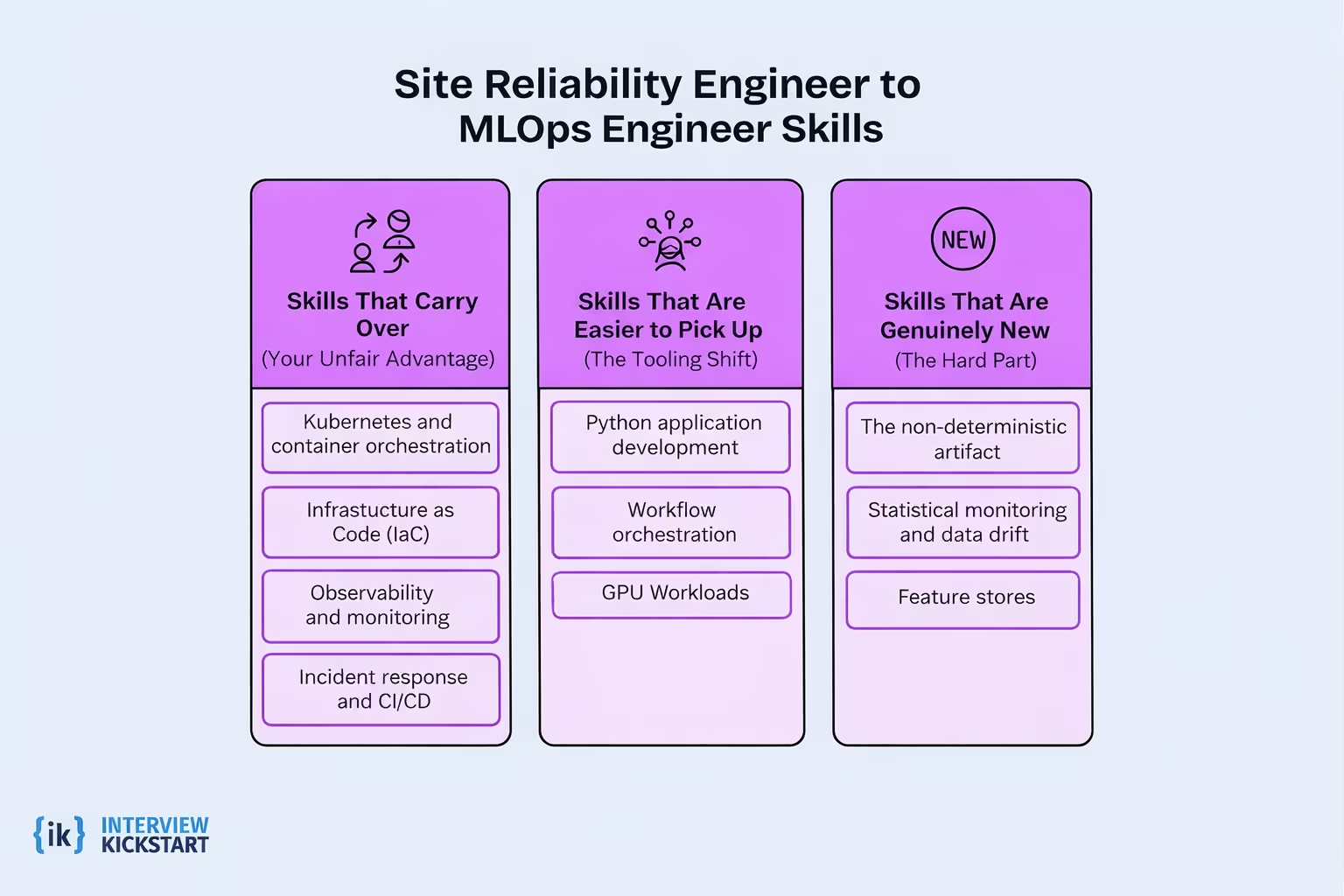
For many engineers, particularly Site Reliability Engineers (SREs), the transition into MLOps is a natural progression. SREs already possess expertise in system reliability, automation, monitoring, and cloud infrastructure—skills that directly overlap with MLOps responsibilities. However, Interview Kickstart's guide explains that additional knowledge is required to fully bridge the gap between traditional software systems and machine learning systems.
One of the most common questions professionals ask is: how is MLOps different from DevOps? According to the guide, while DevOps focuses on deploying and maintaining software applications, MLOps extends these principles to machine learning systems, which introduce new challenges such as data dependencies, model drift, and continuous retraining. This makes MLOps a more complex discipline that combines software engineering, data engineering, and machine learning workflows.
Another key question addressed in the guide is whether MLOps is a good career path. As companies increasingly invest in AI-driven products, the demand for engineers who can operationalize machine learning is rising faster than the supply of qualified talent. MLOps roles are now considered critical in industries such as fintech, healthcare, e-commerce, and enterprise software, where machine learning systems directly impact business outcomes.
The guide outlines a structured roadmap for SREs looking to transition into MLOps roles. One of the first steps is understanding the machine learning lifecycle, including data ingestion, preprocessing, model training, evaluation, deployment, and monitoring. Unlike traditional systems, machine learning models require continuous validation and retraining to maintain accuracy, making lifecycle management a core responsibility.
In addition, the guide highlights the importance of mastering tools and technologies used in ML infrastructure. These include containerization technologies, orchestration platforms like Kubernetes, CI/CD pipelines, and cloud-based machine learning services. These tools enable engineers to deploy models consistently, manage dependencies, and scale systems efficiently across environments.
Data pipeline management is another critical component. MLOps engineers work closely with data scientists to ensure that high-quality data flows through training pipelines and production systems. Workflow orchestration tools are often used to automate data processing, retraining cycles, and performance monitoring, reducing manual intervention and improving system reliability.
The guide also emphasizes hands-on experience as a key differentiator in the job market. Engineers are encouraged to build end-to-end MLOps projects, such as automated machine learning pipelines, real-time model monitoring systems, and scalable deployment architectures. These practical implementations demonstrate the ability to manage production-grade machine learning systems, which is a core requirement for most MLOps roles.
To support professionals making this transition, Interview Kickstart offers specialized training programs that combine machine learning fundamentals, MLOps tools, and real-world project experience. The programs are taught by instructors from leading technology companies and are designed to prepare engineers not only for technical roles but also for high-stakes interviews at top-tier organizations.
As machine learning adoption continues to accelerate, the need for engineers who can operationalize AI systems is expected to grow significantly. Interview Kickstart's guide provides a clear and practical pathway for Site Reliability Engineers looking to expand their careers and take on a critical role in building scalable, reliable machine learning infrastructure. For more information visit: https://interviewkickstart.com/career-transition/
About Interview Kickstart
Interview Kickstart, founded in 2014, is an upskilling platform focused on helping technology professionals advance their careers and secure roles at leading technology companies. With over 20,000 successful learners and more than 700 instructors, including hiring managers and senior engineers from top tech firms, the platform delivers structured programs that combine advanced technical training, hands-on projects, and mock interviews.
###
For more information about Interview Kickstart, contact the company here:
Interview Kickstart
Burhanuddin Pithawala
+1 (209) 899-1463
aiml@interviewkickstart.com
4701 Patrick Henry Dr Bldg 25, Santa Clara, CA 95054, United States

Burhanuddin Pithawala
© Copyright Globe Newswire, Inc. All rights reserved. The information contained in this news report may not be published, broadcast or otherwise distributed without the prior written authority of Globe Newswire, Inc.


